
When it comes to manufacturing high-quality precast concrete wall panels, the precast wall panel extrusion machine is the heart of the production line. It is a precision-engineered piece of equipment designed to produce dense, durable, and dimensionally accurate wall panels efficiently. Because of its importance and the value it represents, proper handling during transportation and relocation is essential to ensure long-term reliability and performance.
One of the most common scenarios in a precast concrete plant is the need to move the precast wall panel extrusion machine using a forklift. Whether you are reorganizing your production layout, performing maintenance, or transporting the machine to another location, the correct lifting method is crucial to prevent damage—especially to its most critical component, the spiral auger.
Understanding the Importance of the Spiral Auger
The spiral auger is the core working element of a precast wall panel extrusion machine. Its role is to compact and extrude the concrete mix through the forming molds, shaping it into solid wall panels with smooth surfaces and uniform density. Because the auger works under continuous pressure and abrasion, it is already a high-wear component. Any additional impact, bending, or shock during transportation can significantly shorten its lifespan or even cause irreparable damage.
In particular, the auger’s alignment with the gearbox is vital. If the auger becomes bent or misaligned due to improper lifting, it may lead to severe operational issues such as vibration, uneven extrusion, or mechanical failure. Therefore, great care must be taken to protect the augers when moving the extrusion machine.
Step 1: Pre-Lifting the Machine Frame
Before using a forklift, first operate the hydraulic system of the precast wall panel extrusion machine to raise the entire frame slightly. The machine should be lifted just enough to create a ground clearance of about 10 centimeters. This space ensures that the forklift forks can easily slide underneath the supporting beams at the machine’s base without touching any sensitive parts.
Make sure that the ground surface is flat and stable before performing this step. Any unevenness may cause the machine to tilt, creating unnecessary risk during the lifting process.
Step 2: Positioning and Adjusting the Fork Arms
Next, carefully maneuver the forklift toward the rear of the machine. Lower the fork arms close to the ground and adjust their width to match the spacing between the support beams of the extrusion machine’s base frame. The goal is to insert the forks smoothly and evenly under both sides of the support beams.
Avoid rushing this step. Sudden or uneven movements can lead to contact with the auger housings or lower structures, potentially causing bending or cracks. Once the forks are correctly positioned, slightly tilt them backward to stabilize the load before lifting.
Step 3: Key Safety Considerations
During the entire lifting and transportation process, never allow the forklift arms to touch the spiral augers or any rotating components of the machine. The forks must only contact the designated support points under the machine frame.
Placing the forks directly beneath the augers can cause disastrous consequences. The auger flights can easily deform under pressure, leading to poor concrete extrusion performance. More seriously, the auger shaft could become misaligned with the gearbox coupling, resulting in vibration, gear damage, or even complete mechanical failure once the machine is restarted.
Therefore, operators must be well-trained and fully aware of the safe lifting zones and the restricted areas of the precast wall panel extrusion machine.
Step 4: Moving and Setting Down the Equipment
Once the machine is securely lifted, move the forklift slowly and steadily to the desired location. Avoid sharp turns, sudden braking, or uneven ground. When setting the machine down, perform the reverse of the pre-lifting process—lower the forks gradually until the base touches the ground evenly. Then, release the hydraulic pressure to stabilize the machine in its new position.
Extending the Life of Your Precast Wall Panel Extrusion Machine
Proper handling is just one aspect of maintaining the performance of your precast wall panel extrusion machine. Regular lubrication, timely replacement of worn auger flights, and inspection of the gearbox and couplings are equally important. A well-maintained machine ensures consistent wall panel quality and reduces production downtime.
Choose a Reliable Manufacturer for Long-Term Value
If you are considering investing in a precast wall panel extrusion machine, choose a manufacturer with proven engineering expertise and after-sales support. Our company specializes in the design and production of high-performance extrusion machines for precast wall panels. With over 20 years of experience in precast technology, we provide durable, energy-efficient, and user-friendly equipment that meets international standards.
Each machine is built using precision-machined components, high-strength materials, and a streamlined control system to ensure consistent extrusion quality. We also offer technical training and maintenance guidance to help clients operate their machines safely and efficiently.
Final Thoughts
Moving a precast wall panel extrusion machine may seem simple, but following the correct forklift handling procedures is essential to avoid costly damage and ensure long-term production reliability. By respecting the machine’s structure—especially its spiral auger system—and adhering to safe operating practices, you can protect your investment and maintain smooth precast production for years to come.
If you’re looking to upgrade your precast plant or need professional advice on choosing the right precast wall panel extrusion machine, contact us today. Our team is ready to provide customized solutions to meet your production goals.
Contact us at www.kelaiii.com or WhatsApp : +86 177 8817 1295
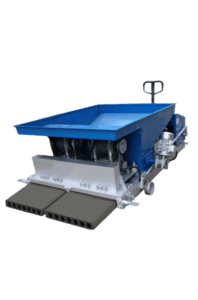
Precast Concrete Wall Panel Extruder Machine for Sale | Kelai Manufacturer

 English
  Arabic
  French
  Russian
  Spanish
  Portuguese
  Turkish