
What Are the Wearing Parts of a Precast Concrete Floor Machine?
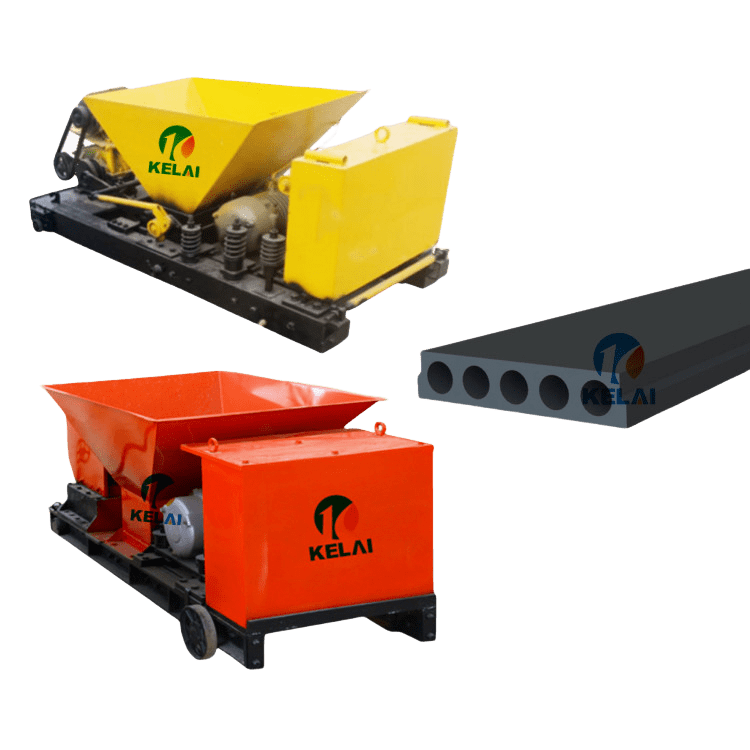
A precast concrete floor machine is a vital piece of equipment in modern industrialized construction. It enables efficient production of floor slabs, including hollow-core and prestressed types, with consistent quality. However, like all heavy machinery, certain components of the machine are subject to wear and tear over time. Understanding which parts are most vulnerable helps in planning maintenance, reducing downtime, and ensuring consistent product quality.
1. Mold Components
Inner Membrane Core Tube–Precast concrete floor machine
The inner membrane core tube is critical for forming the hollow structure in hollow-core slabs. During the concrete pouring and vibration process, continuous extrusion and friction act on this tube. Additionally, demolding stresses further contribute to wear and deformation. Over time, the inner membrane core tube can become deformed or damaged, which negatively affects the uniformity and quality of the hollow structure. Therefore, it is considered a consumable component that requires regular inspection and replacement.
Outer Mold
The outer mold is directly in contact with the concrete, enduring high pressure and impact during the production process. Sand and aggregate particles within the concrete gradually wear the mold surface, while repeated opening and closing can cause cracks or deformation. These changes reduce dimensional accuracy and sealing performance, ultimately affecting the appearance and size of precast floor slabs. Regular maintenance and replacement of the outer mold are essential for ensuring consistent product quality.
2. Vibration System Components
Vibration Motor
The vibration motor ensures the concrete mixture is evenly compacted in the mold, eliminating air pockets and ensuring slab density. Operating at high speeds, the motor’s internal bearings experience significant centrifugal forces and friction, making them prone to wear. Signs of wear include abnormal vibrations, increased noise, and diminished vibration effectiveness, which can compromise the quality of the finished slabs.
Vibrator Connection Parts
The vibration motor is linked to the machine frame or mold via couplings, bolts, or other connectors. These connection points undergo alternating stresses during operation, making them susceptible to loosening or breaking. Any failure here reduces vibration transmission, affecting slab compaction and overall production efficiency.
3. Transmission Components
Belts
In machines using belt drives, friction and repeated stretching over time cause wear and aging. Peeling, cracks, or breakage can occur, leading to unstable transmission and uneven machine operation. Timely replacement is necessary to maintain smooth performance.
Chains and Sprockets
For chain-driven machines, continuous rubbing of chain links and sprocket teeth results in wear. Chain elongation and sprocket tooth wear reduce transmission accuracy and stability, which can lead to operational inconsistencies. Both chains and sprockets are considered vulnerable parts that require regular monitoring and maintenance.
Gears
Gear-driven systems experience wear on the teeth due to constant meshing. Over time, tooth shapes may deform, and thickness may decrease, affecting power transmission efficiency. Faults like tooth hitting and increased noise indicate that gears need inspection or replacement.
4. Other Vulnerable Parts
Seals
Sealing components are present in molds, hydraulic systems, and other parts of the machine. Frequent mold operation and concrete contact accelerate wear of sealing strips, potentially leading to leakage. Hydraulic gaskets may deform under pressure or temperature variations, causing oil or fluid leaks. These consumables require regular replacement to prevent equipment failure.
Cutting Tools
Some precast concrete floor machines feature integrated cutting functions to size slabs according to project specifications. Cutting edges wear quickly when slicing hard concrete, becoming blunt and reducing efficiency. Regular sharpening or replacement is necessary to maintain precision and productivity.
Conclusion
Regular maintenance and timely replacement of consumable parts in a precast concrete floor machine are essential to maintain production efficiency, ensure high-quality slabs, and prolong the life of the equipment. Mold components, vibration systems, transmission elements, seals, and cutting tools are the most common wearing parts. Understanding their function and wear patterns allows operators to plan preventive maintenance schedules, reduce downtime, and maintain consistent performance in industrial-scale precast floor production.
Henan Kelai Industrial Co., Ltd. provides advanced precast concrete floor machines with durable components and optimized maintenance features, ensuring long-lasting performance and high-quality slab production.

 English
  Arabic
  French
  Russian
  Spanish
  Portuguese
  Turkish