
Opening a Concrete Precast Panel Factory: Essential Machines for Production
Setting up a concrete precast panel factory requires specialized machinery designed to manufacture various types of concrete panels, including walls, floors, and other structural components. Using advanced concrete panel machine not only improves production efficiency but also ensures consistent quality, structural integrity, and scalability for large-scale construction projects. Here is a comprehensive guide to the key equipment needed for a modern precast panel factory.
1. Batching Plant
Purpose: The batching plant is the heart of any concrete panel factory. It mixes cement, water, aggregates, and additives to produce consistent and high-quality concrete batches.
Requirements: Precision in weighing and mixing is critical to maintain uniformity. Automated batching systems enhance productivity and reduce human error, ensuring every batch meets the required standards.
Key Features: Look for integrated controls, easy maintenance, and sufficient capacity to meet the production volume you plan. High-end batching plants can also include automated feeding systems to streamline material handling.
2. Concrete Casting Beds (Stationary or Tilting Tables)
Purpose: Casting beds are flat surfaces or molds where concrete is poured and shaped into panels.
Types:
- Stationary casting beds: Fixed, horizontal platforms suitable for high-volume production.
- Tilting tables: Allow easy demolding by tilting, reducing strain on panels and operators.
Key Features: Reinforcement anchors, embedded conduits for electrical or plumbing lines, and customizable mold sizes enhance versatility and efficiency.
3. Molding Machines and Molds
Purpose: These machines shape concrete into precise dimensions and designs.
Types: Modular molds allow flexibility in thickness, surface texture, and panel size, accommodating diverse project requirements.
Key Features: Durable materials, adjustability, and compatibility with different concrete types are essential for long-term reliability and consistent output.
4. Concrete Spreader and Vibrator
Purpose: Evenly distributes concrete across molds while removing air pockets, ensuring smooth and dense panel surfaces.
Key Features: Variable speed and vibration intensity control allow adaptation to different panel thicknesses and concrete formulations, improving panel quality.
5. Reinforcement Placement Machine (Optional)
Purpose: Automates the placement of rebar, steel mesh, or other reinforcements during panel casting.
Key Features: Essential for large-scale operations where uniform reinforcement placement ensures structural strength and reduces manual labor.
6. Curing Systems
Purpose: Accelerates concrete hardening to achieve uniform strength and quality.
Types:
- Steam curing systems: Use controlled heat and humidity.
- Drying chambers: Maintain optimal temperature and humidity without steam.
Key Features: Automated control over temperature and humidity ensures high-quality panel curing.
7. Demolding Crane or Robot
Purpose: Safely removes cured panels from molds and transfers them to storage or the next production stage.
Key Features: Automated systems reduce panel damage and increase operational safety.
8. Finishing Machines
Purpose: Apply surface treatments like polishing, texturing, or protective coatings.
Types: Machines can produce smooth, textured, or architectural finishes, depending on project requirements.
Key Features: Flexible finishing options allow customization for different client specifications.
9. Storage and Transport Equipment
Purpose: Organizes and moves finished panels within the factory or to the construction site.
Types: Includes racks, forklifts, and lifting cranes.
Key Features: Proper storage prevents panel damage and maintains quality standards.
10. Quality Control and Testing Equipment
Purpose: Ensures each panel meets specifications for strength, size, and surface finish.
Types: Compression testing machines, dimensional gauges, and surface finish testers.
Key Features: Integration with software for recording metrics streamlines quality assurance processes.
Optional Automation for Large-Scale Production
For high-volume operations, additional automation can improve efficiency:
- Automated mixing and batching systems: Enhance accuracy and reduce labor requirements.
- Automated palletizing and packaging systems: Streamline end-of-line processing for shipping and storage.
Commonly Used Concrete Panel Machines
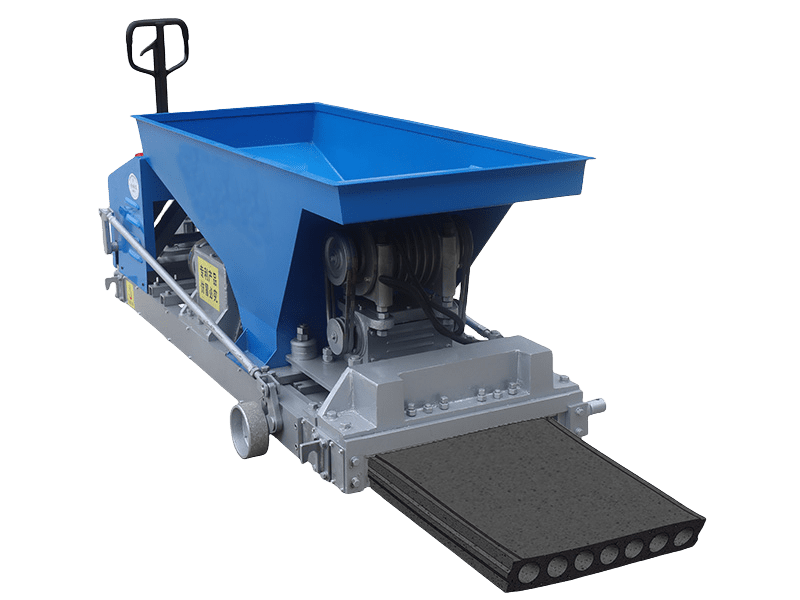
Prestressed Slab Forming Machine
Purpose: Produces prestressed concrete slabs for floors, walls, and roofs.
Features: Slipformers are ideal for long production lines, while extrusion machines allow continuous, high-speed output. Perfect for mass production.
Concrete Distributor and Vibrator
Purpose: Ensures even concrete distribution and compacting to remove bubbles.
Features: Adjustable speed and vibration control guarantee consistent thickness and surface quality across all panels.
Conclusion
A concrete panel machine factory requires careful planning, from batching to curing and quality control. By investing in high-quality machinery, manufacturers can produce consistent, durable, and efficient precast concrete panels suitable for residential, commercial, and industrial construction. Modern precast technology not only increases productivity but also reduces labor costs and ensures superior structural quality, positioning your factory for long-term success in the construction market.
Henan Kelai Industrial Co., Ltd. provides you with high-quality products and professional services, and looks forward to cooperating with you.If you need any information, please contact us !
Precast Slab Cutting Machine | Concrete Hollow Core Slab Cutter

 English
  Arabic
  French
  Russian
  Spanish
  Portuguese
  Turkish